
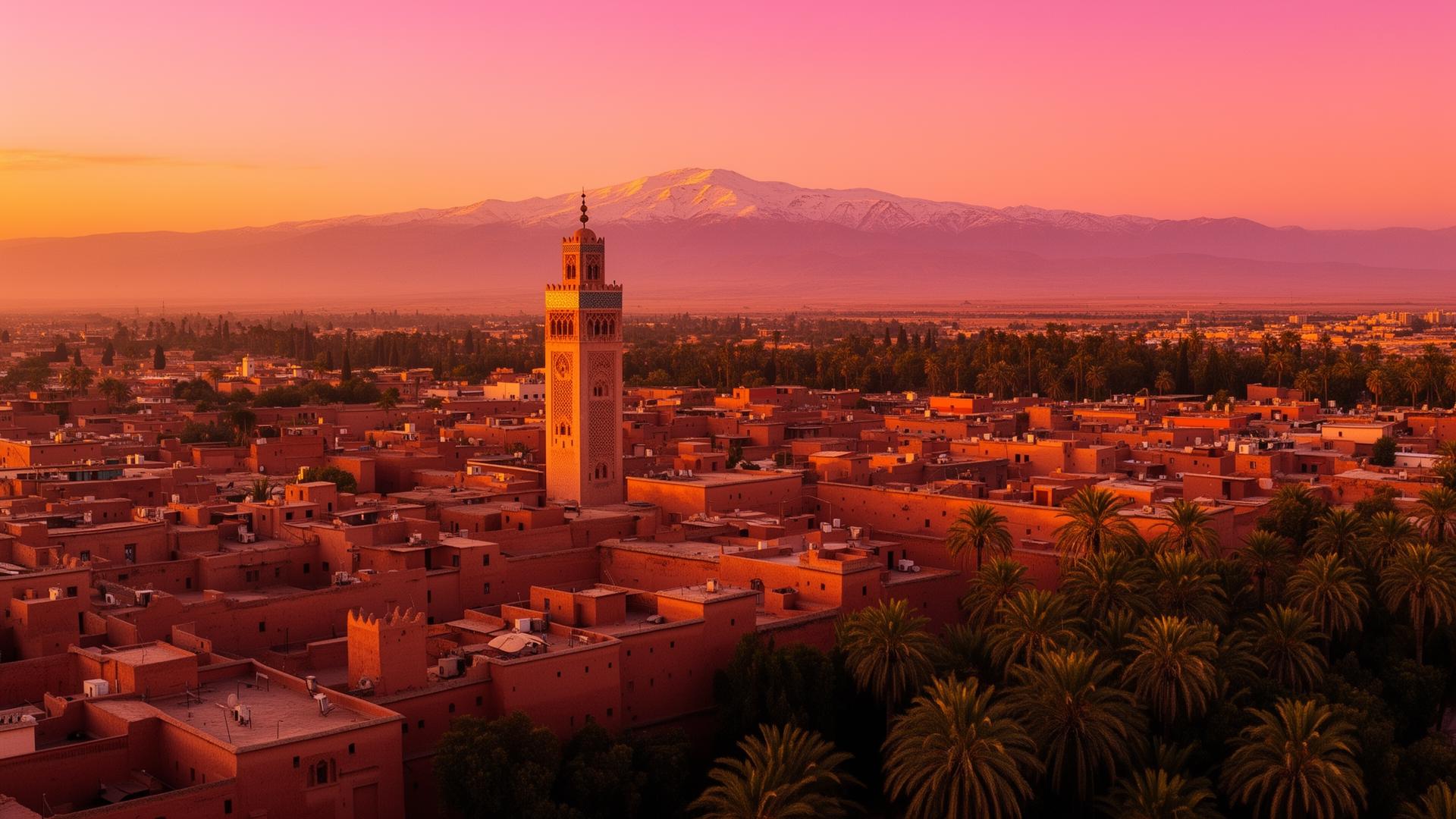
What to do in Marrakech: the complete guide to the ochre city
Medina, palaces, gardens, food stalls and trips into the Atlas: 12 must-sees and all the practical advice to plan your stay in Marrakech.
Known as the ochre city, Marrakech is arguably Morocco's most iconic destination. Between the frenzy of Jemaa el-Fna square, the maze of the medina, dream-like gardens and the proximity of the Atlas mountains, the imperial city packs in everything that makes the country magical. Here is what you need to know to plan your trip.
12 must-sees in Marrakech
Jemaa el-Fna square
UNESCO-listed, the beating heart of Marrakech. At sunset, storytellers, snake charmers and food stalls take over the square.
Koutoubia mosque & minaret
The tallest landmark in town (77 m), visible from everywhere. The interior is reserved for Muslims, but the gardens are open to all.
Medina souks
Souk Semmarine for lanterns, the Dyers' souk for colours, Souk Haddadine for wrought iron. Get lost — it's the whole point.
Bahia Palace
A masterpiece of Arab-Andalusian art: zellige tiles, painted cedar ceilings, flowering patios. 70 MAD entry.
Ben Youssef Medersa
A former Quranic school, a jewel of Merinid architecture. Reopened in 2022 after a major restoration.
Majorelle Garden & YSL museum
The famous Majorelle blue, created by Jacques Majorelle then saved by Yves Saint Laurent. Book online — the queue can exceed an hour.
Saadian Tombs
Hidden for 200 years, rediscovered in 1917. The hall of twelve columns is a peak of Saadian art.
El Badi Palace
Grandiose ruins of a 16th-century palace, now home to nesting storks. Panoramic medina view from the ramparts.
Secret Garden
Two restored gardens (exotic and Islamic) inside the medina. Total calm and a fine lesson in Arab-Andalusian garden design.
Traditional hammam
The not-to-miss experience. Neighbourhood hammam (Mouassine, local) or riad spa (more comfortable).
Gueliz & the new city
Art Deco architecture, contemporary art galleries (David Bloch, MACAAL) and trendy cafés. The modern counterpoint to the medina.
Sunset from a rooftop
Café des Épices, Nomad or Le Salama: golden light on the medina's ochre walls — a classic.
Neighbourhoods of Marrakech
The Medina
The historic heart within the ramparts. This is where to stay in a riad for the full experience.
Gueliz
The French new city: wide avenues, modern restaurants, shopping and nightlife.
Hivernage
Chic residential district with palaces (La Mamounia, Royal Mansour) and lush gardens.
Kasbah
South of the medina, around the Saadian Tombs and El Badi palace. Quieter.
Palmeraie
10 km from the centre: palaces, camel rides, pool hotels. Ideal to unwind.
Sidi Ghanem
The creative industrial zone: Moroccan designer showrooms, galleries, concept stores.
5 experiences not to miss
Dinner on Jemaa el-Fna
Pick a busy stall (a sign of freshness): numbers 14, 31 or 32 are classics. Skewers, tagines, snails and mint tea for €5–10.
Moroccan cooking class
Learn to make a tagine or pastilla in a riad: Café Clock, La Maison Arabe or Souk Cuisine. Half-day, €50–80.
Sunrise hot-air balloon
Lift-off at 5 a.m., flight over the palmeraie and the Atlas. About €200 per person, unforgettable.
Chez Ali dinner show
Moroccan folklore (Fantasia, Gnaoua, dance) in a kitsch but joyful setting. Worth doing once.
Sunset in the Agafay desert
45 min from Marrakech: stony dunes, Berber dinner under a tent, starry sky. The alternative to the sand desert when you're short on time.
What to eat in Marrakech
Specialities to try
- • Lamb tagine with prunes and almonds
- • Tanjia marrakchia: meat slow-cooked in a clay jar in the embers
- • Pastilla with pigeon or fish (Essaouira)
- • Friday couscous (the traditional day)
- • Harira, a tomato, lentil and chickpea soup
- • Briouates, msemen, sweet mint tea
Where to eat
- • Nomad — modern Moroccan, rooftop terrace
- • Le Jardin — leafy patio in the medina
- • Mechoui Alley — roast lamb for 50+ years
- • Café des Épices — iconic terrace on Place des Épices
- • Plus 61 — creative table in Gueliz
- • Stalls 14, 31, 32 — Jemaa el-Fna at night
Day trips from Marrakech
Marrakech is the ideal base to fan out. Here are the most popular itineraries, with our detailed guides and distance calculators.
Marrakech → Essaouira
3h drive to the windy city. Beach, Portuguese ramparts, grilled fish.
See itineraryMarrakech → Fez
The great crossing via the Atlas and Ifrane. Best done as a 2-day road trip.
See itineraryCasablanca → Marrakech
The most convenient motorway. Fast ONCF train in 2h30 or car in 2h30.
See itinerary💡 Calculate another distance
Heading to Ouarzazate, Agadir or Chefchaouen? Our distance calculator estimates duration, mileage and fuel cost for any trip in Morocco.
Open the route calculatorPractical tips
When to go?
March–May and September–November: perfect temperatures, soft light. Avoid July–August (40 °C+), December–February can be cool in the evening (10 °C).
Where to stay?
A riad in the medina for immersion (Mouassine, Bahia, Kasbah). Hivernage or Palmeraie for palace comfort. Gueliz if you prefer the modern city.
Transport
On foot in the medina. Beige petit taxis (5–30 MAD on the meter) for the rest. No need for a car in town — useful to explore beyond. Should you rent a car?
Money & payment
Moroccan dirham (€1 ≈ 11 MAD). Cards accepted in hotels and modern restaurants, cash is a must in the souks and taxis. ATMs everywhere.
Bargaining
In the souks, divide the first price by 3 then work upwards. A smile, patience and mint tea are part of the game. In fixed-price shops (Gueliz), no haggling.
Dress & culture
Covered clothing is recommended in the medina (shoulders, knees). Ramadan shifts hours and mood. Photographing people: always ask first.
📊 Estimate your Marrakech budget
Our calculator breaks down your budget by category (accommodation, meals, transport, activities) based on your travel profile.
Open the budget calculatorFrequently asked questions
How many days do you need to visit Marrakech?
Plan for 3 full days to see the essentials (medina, Jemaa el-Fna, Majorelle garden, Bahia palace, Ben Youssef) and 4 to 5 days if you want to add a trip to Essaouira, the Ourika valley or the Agafay desert.
What is the best time to visit Marrakech?
The ideal periods are March–May and September–November: mild temperatures (20–28 °C), little rain and beautiful light. Avoid July–August when daytime temperatures can exceed 40 °C.
Is Marrakech safe for tourists?
Yes, Marrakech is generally safe. The main annoyances are constant solicitations in the medina and classic scams (fake guides, inflated prices in the souks). Stay firm, negotiate, and use official taxis (beige petit taxis).
Do you need a car in Marrakech?
Not in the city itself: the medina is pedestrian and distances within the city are short. However, renting a car becomes useful if you want to explore the Atlas, Essaouira, Ouzoud or do a road trip. Our 'Should I rent a car?' tool helps you decide.
What to see in one day in Marrakech?
If you only have one day: morning in the medina (Koutoubia, souks, Jemaa el-Fna square), lunch in a riad, afternoon at Bahia palace and Ben Youssef medersa, then sunset on a rooftop café and dinner at the Jemaa el-Fna food stalls.
What day trips can you do from Marrakech?
The classics: Essaouira (3h drive, Atlantic coast), Ouzoud waterfalls (2h30), Ourika valley and Atlas (1h), Agafay desert (45 min), Aït Ben Haddou and Ouarzazate (4h). For the sand desert (Merzouga), plan at least 2 days.
What budget should you plan for Marrakech?
Backpacker: €30–50/day. Comfort (mid-range riad + restaurants): €80–120/day. Premium (palace, private driver): €200/day and up. Estimate precisely with our Morocco travel budget calculator.
How do you get around Marrakech?
On foot in the medina (mandatory, narrow alleys). Beige petit taxis for in-town trips (5–30 MAD on the meter, otherwise negotiate beforehand). Tourist horse carriages around the medina. Bus #19 between the airport and the centre (30 MAD).